Last updated November 18, 2026
DIY vs Professional Room Addition Contractor: What’s Safe to Do Yourself
Nevada lets a homeowner pull their own building permit under the owner-builder exemption. The moment most people hear that, they start sketching a Saturday plan and a rental truck. But here’s the part the statute buries: the second you hire one unlicensed helper to frame a wall or run a circuit, you stop being an owner-builder in the eyes of the law and become the general contractor of record. You inherit the liability, the inspections, and the insurance problem that comes with them. This guide walks through what Nevada actually permits you to do on your own, what requires a licensed trade, and where DIY quietly costs more than hiring. We’ve watched plenty of Mesquite homeowners learn this the hard way, and the goal here is to keep you off that list.
Quick Answer
In Nevada you can legally act as your own owner-builder on a room addition: pull the permits, do the design coordination, and handle finish work yourself. But structural framing, electrical, plumbing rough-in, and gas work require licensed trades, and the moment you hire one unlicensed sub you take on contractor-level liability. Safe DIY work in Mesquite means painting, trim, landscaping restoration, and cleanup. Everything that fails an inspection is not safe DIY.
Table of Contents
- What Nevada’s Owner-Builder Exemption Actually Allows
- The Affidavit You Sign and What It Costs You
- What’s Legally DIY-Able in Mesquite
- What Requires a Licensed Trade
- How Unpermitted Work Gets Discovered at Sale
- Insurance Language That Excludes Owner-Built Work
- The Honest Cost Comparison
- Common Mistakes to Avoid
- When to Call a Professional
What Nevada’s Owner-Builder Exemption Actually Allows
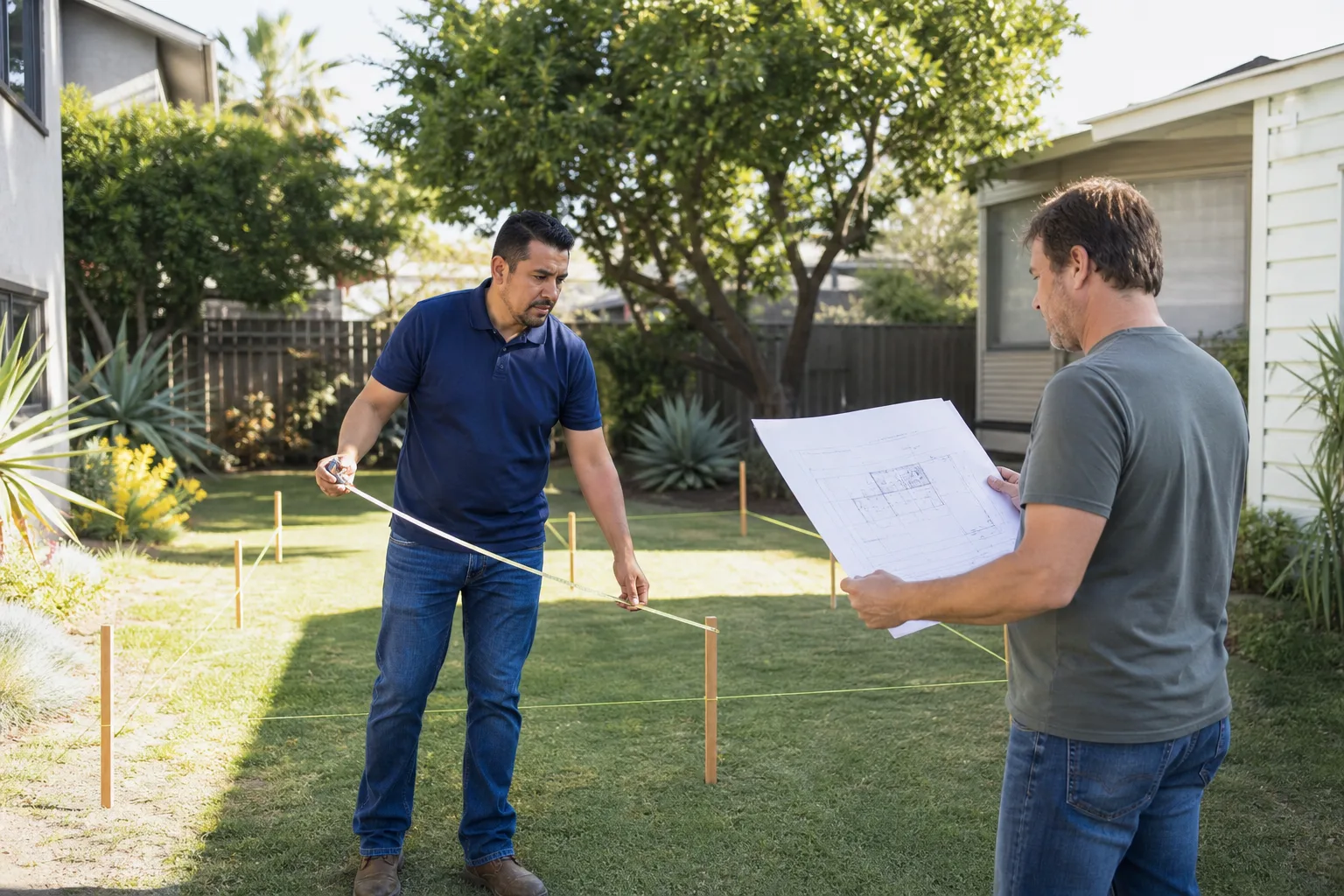
Nevada Revised Statutes 624.031 is the section that gets quoted in every forum thread, usually out of context. In plain terms: an owner-builder is a person who constructs or improves a building on their own property for their own use, not for sale or rent. When that’s you, you can apply for the permit in your own name and act as the responsible party on the jobsite. The work still has to meet the same code, pass the same inspections, and satisfy the same Mesquite building department reviewers as any contractor-driven job.
The exemption does not mean you can do anything you want. A few ground rules:
- The building must be owner-occupied or for the owner’s own use, not built to flip or rent out immediately.
- You are responsible for every subcontractor you bring onto the site, licensed or not.
- You must disclose on the permit application that you are the owner-builder.
- You cannot act as an owner-builder on more than one property at a time or on a property that isn’t your primary residence or intended residence.
Mesquite’s climate adds a wrinkle that most owner-builder write-ups ignore. Summer highs routinely push past 110°F, which affects concrete cure times, stucco schedules, and how long framing lumber can sit exposed before it cups. A homeowner coordinating trades for the first time tends to underestimate that window. If you’re building slow because you’re learning as you go, the desert is not patient with you. That’s a design and scheduling problem, and it’s one of the reasons a lot of Mesquite owner-builders end up converting to a professional build mid-project.
The Affidavit You Sign and What It Costs You
Most people hear “owner-builder exemption” and picture a simple form. It’s not simple. When you pull your own permit in Mesquite, you sign an owner-builder affidavit swearing that you will occupy the structure, that you are doing the work yourself or supervising it, and that you accept full responsibility for compliance. That signature is not ceremonial. It has three specific consequences:
- You become the general contractor. Every sub on the site answers to you. If they fail an inspection, the correction is your problem. If they cause damage, your insurance is the first stop.
- Your name goes on the record permanently. The permit, the inspections, and the affidavit are attached to the parcel. When you sell, they surface in the disclosure packet.
- The “for sale or rent” exclusion bites. If you finish the addition and rent it out within a year or list the home as a spec sale with the new square footage priced in, you can trip the exemption’s own exclusion. That is a conversation nobody wants to have with a buyer’s attorney.
The affidavit is also where most owner-builders accidentally void their own exemption. They sign it in their name, then bring in a friend-of-a-friend who “knows electrical” to wire the new room. That’s fine until the inspector asks for the electrician’s license number, and there isn’t one. At that point the work is unpermitted, the affidavit misrepresented the arrangement, and Mesquite code enforcement has a real problem to solve on your dime.
What’s Legally DIY-Able in Mesquite
Here’s the short list of work where a homeowner with reasonable skills and time can genuinely save money without creating a liability tail. Note what’s on it, and just as importantly, what isn’t.
- Finish painting and trim. Interior paint, baseboards, door casings, and cabinet refinishing are all fair game. The inspector doesn’t care who held the brush.
- Flooring install on a finished substrate. If the slab or subfloor is already inspected and signed off, laying LVP, tile, or carpet does not require a license.
- Cabinetry and closet systems. Hanging cabinets, installing closet organizers, and mounting shelves are finish work.
- Landscaping restoration and hardscape finishing. Gravel, pavers, drip irrigation on the finish side, and cleanup after the build.
- Fixtures, appliances, and finish hardware. Ceiling fans, faucet trim, towel bars, light fixtures on a circuit someone else wired.
- Demo of non-load-bearing finishes. Pulling old drywall, tearing out carpet, removing an old kitchen – as long as nothing structural or anything with a live wire or pipe inside is touched.
Notice that none of these cross an inspection line. That’s the test: if the work is subject to inspection under the Mesquite building code, it’s not a safe DIY target, regardless of how the statute reads.
What Requires a Licensed Trade
Nevada draws the line at anything that carries real risk of harm, structural failure, or code failure. These are the categories where you need a licensed trade, and where the owner-builder exemption does not protect you from the consequences of doing it wrong.
Electrical
New circuits, panel work, and anything that ties into the service require a licensed electrician. That applies even if the addition is small. A 200-amp panel feeding a garage conversion and a new bedroom is not a homeowner-friendly project. The safety stakes are obvious: shock, fire, and a failed inspection that stops the entire build until it’s corrected.
Structural work
Adding a beam, cutting into a load-bearing wall, framing a new roof tie-in, and pouring a foundation all need an engineer’s stamp and a licensed crew. In Mesquite, the expansive soils in some pockets make foundation design a real engineering question, not a “ring the slab with rebar and hope” question.
Plumbing rough-in and gas
Running supply and drain lines inside a wall, adding a bathroom to a garage conversion, and any gas line extension are licensed-trade work. Gas in particular is where inspectors and insurers hold zero tolerance, and for good reason.
HVAC
Adding a room to a house in Mesquite means recalculating the cooling load. The desert heat is unforgiving, and a minisplit sized for the wrong square footage will run at 100% capacity from June to September. That is a licensed HVAC trade decision, not a sizing chart you find online.
How Unpermitted Work Gets Discovered at Sale
Unpermitted additions have a way of surfacing at exactly the wrong moment. In Mesquite, the common discovery paths are:
- The listing agent pulls the assessor’s record. A room that added 300 square feet but doesn’t show a permit is a red flag on the seller’s disclosure.
- The buyer’s lender orders an appraisal. Appraisers verify permitted square footage. Unpermitted square footage typically doesn’t count toward the value, which means you paid to build space the bank ignores.
- The buyer’s inspector flags the electrical. An inspector who sees a subpanel feeding a new addition without a permit sticker will note it. That kills financing or forces a renegotiation.
- The title company checks city records during closing. Some municipalities, including Mesquite, have a records check that surfaces open permits or missing finals.
Once discovered, the cost isn’t just the permit fee. It’s opening the walls for inspection, correcting whatever wasn’t up to code, paying the retroactive permit fees, and possibly removing work that can’t be brought up to standard. We’ve seen homeowners spend more to retroactively permit an owner-built addition than they would have paid a contractor to build it correctly the first time. The Garrison Standard exists for exactly this reason – every Fielding ADU Builders Mesquite project goes through the permit process by the book, inspected and signed off, so nothing surfaces on a disclosure.
Insurance Language That Excludes Owner-Built Work
Homeowner’s insurance policies are written to cover damage from events, not to cover workmanship defects. But the language gets much sharper around owner-built structural work. Read the exclusions section and you’ll typically find:
- Coverage for water damage caused by faulty plumbing installation is excluded when the installation was not performed by a licensed contractor.
- Fire damage from an electrical fault is excluded when the electrical work was not permitted and inspected.
- Structural failure caused by improper framing is excluded outright in most policies.
- Some carriers add a rider that voids coverage on any unpermitted addition entirely.
Policies vary, and the specific exclusion language is something to check with your insurance carrier directly. But the pattern is consistent: insurers price risk based on licensed, inspected work. An unpermitted, owner-built addition reads to an adjuster as an assumed risk the policy wasn’t priced for, which means the claim gets denied and the file stays open. In a Mesquite wind event or a monsoon-season roof leak, a denied claim on a room you just paid to build is a bad day.
That’s also why a written guarantee matters more than it sounds like it should. The Garrison Standard covers workmanship defects on our projects for 365 days. If something fails, we come back and make it right at no charge. You aren’t holding the risk on the addition you just paid us to build.
The Honest Cost Comparison
Here’s where DIY actually wins and where it loses. The math is honest if you count your own time and the callback risk.
Where DIY saves real money
- Finish painting. A room addition of roughly 300 square feet has about $800 to $1,800 of interior paint labor. DIY-able if you have a steady hand and a weekend.
- Landscaping restoration. After a build, restoring the yard to its prior state runs $1,500 to $3,500 depending on how much the equipment tore up. Most of that is doable with a rented tiller, gravel, and drip line.
- Finish trim and accent walls. Baseboards, door casings, and feature walls run $600 to $1,500 in labor. Cheap to DIY if you own a miter saw.
- Cleanup and hauling. Construction debris removal on a mid-size addition frequently runs $600 to $1,200 for a roll-off. Not glamorous savings, but real.
Where DIY creates expensive callbacks
- Moving a framer’s mistake. Retrofitting a wall that passed rough framing but not final framing inspection can cost $3,000 to $6,000 in corrections to someone else’s work.
- Electrical rework. Redoing an unpermitted circuit after a failed inspection runs $2,000 to $5,000, and the second electrician charges more to fix someone else’s panel.
- Concrete re-pour. If a slab is off-grade or under-thickness and fails inspection, that’s $8,000 to $15,000 to tear out and start over. In Mesquite’s soil, this happens.
- Insurance denial on a claim. Not a line item, but a five-figure swing when the claim would have been covered on a permitted job.
For a sense of the professional-build side of the math, our room addition contractor in Mesquite page breaks down the line items on a typical addition, and garage conversions run leaner if you’re weighing the smaller footprint. The prefab route through ADU builders in Mesquite is worth including in the comparison too – platforms like Plant Prefab and Abodu handle the structural and mechanical scope off-site, which changes the DIY math.
Common Mistakes to Avoid
- Signing the owner-builder affidavit and then hiring an unlicensed sub. Two sentences in the affidavit, one line on the permit application, and your exemption is void. You become the general contractor and the personal liability runs to you.
- Assuming there’s no inspection because you pulled the permit yourself. The inspections are the same. The Mesquite building department inspects owner-builder work exactly the way it inspects contractor work.
- Underestimating desert cure and cure-time scheduling. Concrete poured in July in Mesquite needs heat management or it cracks. Lumber left in the sun for two weeks cups. Most first-time owner-builders find this out the expensive way.
- Telling your insurer nothing. Adding square footage without notifying your carrier can void coverage or leave the new space completely uninsured if a loss happens before you update the policy.
- Doing the electrical because “it’s just a bedroom.” A bedroom is exactly the space where electrical error causes fire at 2 a.m. This is not the place to save $1,200.
- Skipping the disclosure on resale. Nevada requires disclosure of known defects and unpermitted work. An undeclared addition is grounds for a lawsuit after the sale closes.
- Treating the permit as the finish line. Final inspection, final permit close-out, and the appraisal update are all part of the job. A permit left open at the city is as bad as no permit at all.
When to Call a Professional
Call a professional the moment your addition crosses one of three lines: it involves structural change, it has any new electrical or plumbing, or it touches gas or HVAC. That covers the vast majority of real additions. Call one immediately if a permit has already been pulled under your name and you’ve brought in any unlicensed help – that situation needs correction, and it needs it before inspection. Call one if you’re planning to sell within three years, because the disclosure math on an owner-built addition rarely works in your favor. And call one if the trade scheduling itself is already behind on week two.
Fielding ADU Builders Mesquite offers free estimates in Mesquite – call (833) 717-0766 to schedule a visit and see what a permitted, priced-in-writing build actually costs before you commit to the DIY route. Every estimate is free, every price is written down before work starts, and every project is backed by The Garrison Standard for a full year.
Frequently Asked Questions
Yes. Nevada Revised Statutes 624.031 allows a homeowner to act as an owner-builder on their own primary residence, which means you can pull the permit in your own name. You sign an owner-builder affidavit swearing to do or supervise the work yourself and to occupy the structure. The catch: you become the general contractor of record, and if you bring in any unlicensed sub, you’re taking on the liability that goes with it.
Code enforcement can require you to remove the work, retroactively permit it, or both. Retroactive permitting usually means opening walls for inspection, correcting everything that doesn’t meet current code, and paying the permit fee plus any penalties. The typical correction cost on a mid-size addition runs $8,000 to $25,000, and the work is on your dime because most insurance policies exclude it.
Usually not, or not fully. Standard policies exclude damage caused by faulty workmanship, and coverage gets much narrower when the work was owner-built and unpermitted. Fire from an unlicensed electrical install and water from an unpermitted plumbing rough-in are the two most common denied-claim scenarios. Call your carrier before you start, and update the policy once the addition is complete.
For finish work only, yes – paint, trim, flooring, and landscaping can save $3,000 to $7,000 on a typical addition. For the structural, electrical, plumbing, and HVAC scope, no. The callbacks, corrections, and potential insurance denial on owner-built rough work routinely cost more than what a licensed contractor would have charged. The savings are real on the finish line, not on the rough-in line.
You can frame non-load-bearing interior walls yourself, but any wall tying into the roof line, any wall that carries a beam, and any exterior wall change requires structural work under a licensed trade. Wiring always requires a licensed electrician. The hybrid approach – you frame the interior, a licensed crew does the structural and the electrical – is workable, but you still hold the permit and the inspection risk. Call (833) 717-0766 for a free estimate if you want to see what the full-scope cost runs.
Plan on roughly 4 to 7 months for a full permitted room addition, including design, permit review, and construction. Owner-builder projects typically run 2 to 4 months longer because the schedule depends on when you can get to the work, and in Mesquite the summer heat removes about two workable months from the calendar. Prefab and modular routes through platforms like Abodu or Plant Prefab can shorten the on-site phase, but the permit window stays.
The Bottom Line
Nevada’s owner-builder exemption is real, but it is narrow. It lets you pull the permit and do finish work yourself, and it stops the moment you hire unlicensed help. Structural, electrical, plumbing, gas, and HVAC work all require licensed trades, and the risk on the other side of the line isn’t a fine – it’s a denied insurance claim and an addition you can’t disclose cleanly when you sell. The honest DIY savings are in paint, trim, landscaping, and cleanup. Everything else is expensive to get wrong. If your project crosses the structural or mechanical line, that’s the moment to price a professional build. Fielding ADU Builders Mesquite works with the leading prefab and modular platforms as well as conventional builds using materials like James Hardie siding, and every project gets a written price before work starts. You can see how the full-service side works on our Fielding ADU Builders Mesquite home page.
Contact
The fastest way to know whether your addition is DIY-able or needs a licensed crew is a free estimate. Call Fielding ADU Builders Mesquite at (833) 717-0766 and tell us what you’re planning – a garage conversion, a new bedroom, or a backyard ADU. We’ll come out, walk the lot, and give you a written price before any work starts. Live person every call, around the clock. Estimates are always free.
Written by the team at Fielding ADU Builders Mesquite.