Last updated November 18, 2026
Room Addition Contractor Warning Signs Every Homeowner Should Know
A verbal price on a room addition is not a price. It is an opening position, and it moves the moment the contract shows up. That is the moment most bad builds begin, months before anyone touches a shovel. The homeowners we talk to in Mesquite who ended up unhappy can almost all point back to a single early conversation where something felt off and they let it slide because the number was good. In this guide we name the signals plainly: how a contractor handles the estimate, the contract, and the permit conversation. You will learn what a license lookup actually tells you, which contract clauses quietly protect the builder instead of you, and why a contractor who pushes back on a second bid is telling you something important.
Quick Answer
You spot a bad room addition contractor before work starts, not after. The reliable warning signs are a verbal or lump-sum price with no line items, a promise to “pull the permit once we get started,” a contract with vague scope and one-sided change-order language, and resistance to you getting a second bid or running a license check. If any of those show up in the first two conversations, walk away regardless of how good the number sounds.
Table of Contents
- The Verbal Price Problem
- “We’ll Pull the Permit Once We Get Started”
- Why a Lump-Sum Bid With No Line Items Hurts You
- Running the Nevada Contractor’s Board Lookup
- Contract Clauses That Protect the Contractor, Not You
- The Second-Bid Objection
- Timeline and Communication Signals
- Common Mistakes to Avoid
The Verbal Price Problem
If a contractor hands you a verbal price on a room addition and says the contract comes later, the price will be different when the contract arrives. Not always by a lot. Sometimes by just enough that you have already told your spouse the number and now you feel locked in. That is the point of the move.
A verbal price costs the contractor nothing to give. It wins the job on the strength of a number nobody has committed to in writing, and it leaves the real negotiation for later, when you have already picked finishes and told your family the addition is coming. Every experienced homeowner who has been through a bad build can trace the trouble back to that exact moment.
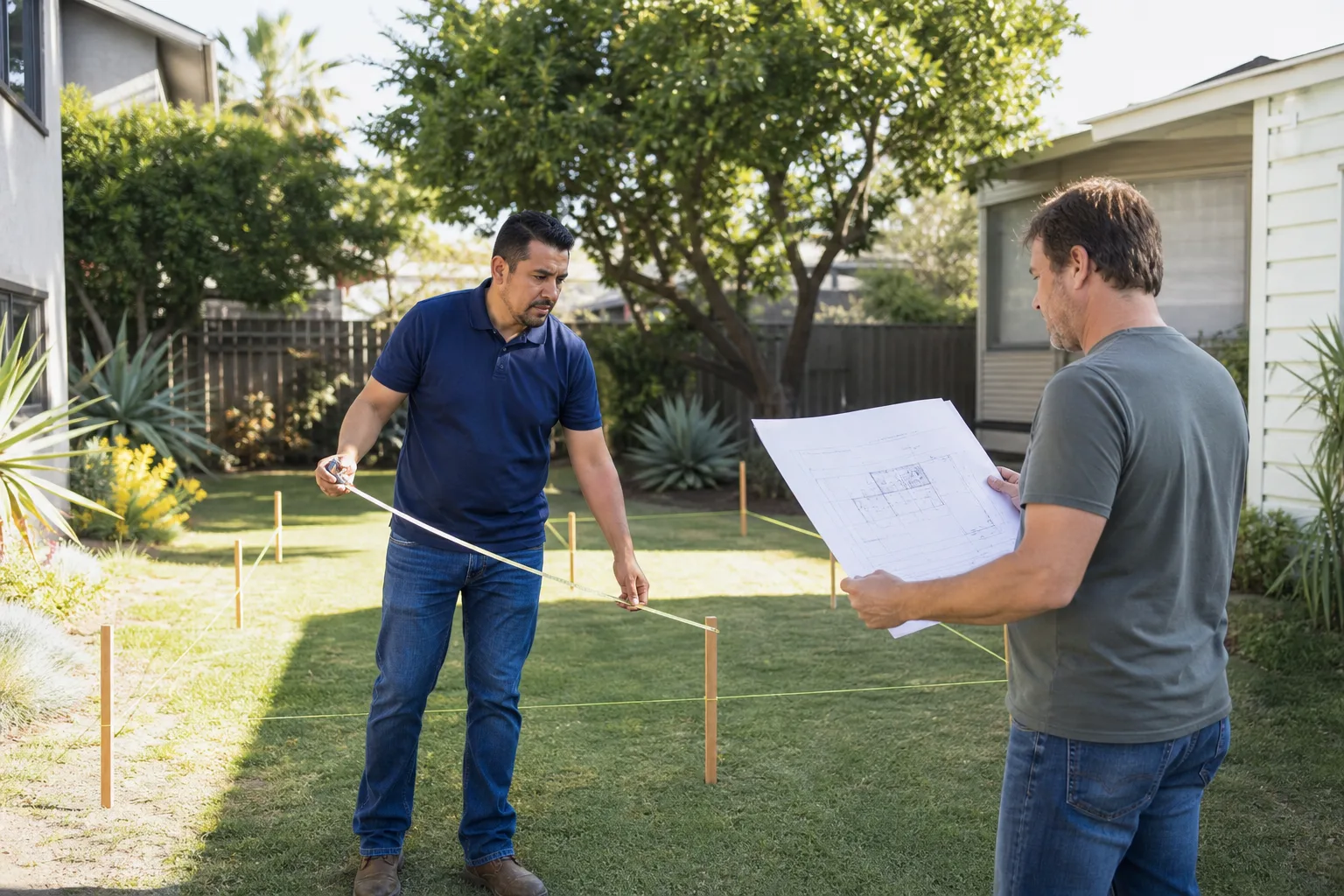
The fix is simple and non-negotiable: ask for the full written scope and price before you compare anything. A written price should show what is included and what is not, room by room, line by line. In Mesquite, a straightforward room addition often lands in a wide range depending on size, foundation work, and whether you are building on a slab already there or pouring new. You cannot judge that range against a competitor if one bid is a single dollar figure and the other is a breakdown. Ask for the breakdown.
We put the price in writing before any work starts, every time, and we do not move it once you approve it. That is part of Fielding ADU Builders Mesquite home and how we run every project. If a contractor will not do the same, that refusal is your first warning sign.
“We’ll Pull the Permit Once We Get Started”
This one sentence tells you more about a contractor than an hour of conversation. Permits are pulled before work, by a licensed contractor, in a process that requires a valid license number on the application. When a contractor says the permit will come “once we get started,” one of three things is usually true, and none of them are good.
- The license is not current or does not cover the work. A contractor without an active license cannot pull the permit, so they defer the conversation and hope you stop asking.
- They plan to skip the permit entirely. Unpermitted additions in Mesquite create problems at resale, at insurance renewal, and if the city inspects the property for any other reason.
- They are stalling because they have a history. A contractor who cannot get a permit approved cleanly tends to know it in advance.
Nevada requires permits for structural additions, electrical, plumbing, and gas work. An addition that touches any of those needs a permit pulled before a single nail is driven. A contractor who is fluent in the process will tell you exactly which permits your project needs, roughly how long the plan review takes, and what the inspection sequence looks like. If they get vague on any of it, ask directly: “What is your license number, and which permits will you pull?” A good contractor answers in seconds.
Permitted work is not optional in this trade. The Garrison Standard we work to treats by-the-book permitting as a baseline, not a selling point.
Why a Lump-Sum Bid With No Line Items Hurts You
A single dollar figure with no breakdown is not a bid. It is a guess with a signature line. When a contractor hands you one number and nothing else, you cannot verify what you are paying for, you cannot compare it to a competing bid honestly, and you have almost no way to dispute a change order later.
Here is what a real line-item bid lets you do:
- Compare scope, not just totals. Two bids at the same price can include wildly different materials, finishes, and site work.
- Catch what is missing. A bid that leaves out site prep, foundation, or finish-level details will add those costs as change orders.
- Hold the contractor to the number. When the estimate says “James Hardie siding on three exterior walls” and the invoice charges you extra for siding on those same walls, the written bid is your evidence.
- Understand what “not included” means before you sign. A good bid lists exclusions in plain language.
In our experience, the lump-sum bid is where the price-at-the-door problem starts. The number looks clean because it is incomplete. The change order is where the real cost lands, and by then the contractor has already framed your roof to the old dimensions. Fielding ADU Builders Mesquite hands you the written price before a single nail is driven, and the number you approve on day one is the number on the final invoice.
Running the Nevada Contractor’s Board Lookup
Yes, you can and should check a contractor’s license before you hire them, and it takes about four minutes. The Nevada State Contractors Board maintains a public license lookup. Here is exactly how to run it:
- Go to the Nevada State Contractors Board’s website and find the license lookup tool.
- Search by the contractor’s license number, which they should give you without hesitation. You can also search by business name.
- Confirm the license is active, not expired, suspended, or revoked.
- Check the classification to make sure the license covers residential room additions. A license that does not cover the work is not a valid license for your job.
- Open the complaint history tab. This is the part most homeowners skip and the part that matters most. A contractor with a long pattern of unresolved complaints is a contractor you do not want on your property.
The complaint history is where the picture gets honest. One or two complaints over a long career happens to almost everyone in this trade. A stack of them, especially recent ones with the same theme (unfinished work, price disputes, permit problems), is a pattern, not bad luck. A contractor who resists giving you the license number is answering the question for you. Walk away.
Contract Clauses That Protect the Contractor, Not You
Contracts are written by the person who benefits from them. Most room addition contracts from a bad operator are quietly one-sided, and the language is not complicated once you know where to look. These are the clauses to read twice.
- Vague scope language. Words like “standard materials” and “to be determined” leave room for the contractor to swap down later and argue the contract allowed it.
- Change-order language that lets the contractor set the price. A fair contract defines how changes are priced before they happen. An unfair one says the contractor will charge “reasonable costs” with no ceiling and no approval step.
- Payment schedules that run ahead of the work. If the schedule asks for a large deposit or payments that race ahead of the work completed, the contractor is using your money to fund other jobs.
- Broad arbitration or mediation clauses. These can quietly remove your ability to take a real dispute to the state board or court.
- No warranty language, or warranty language full of conditions. A one-line “workmanship warranted for 90 days” clause with a long list of exclusions is not a guarantee. It is a way of saying there is no guarantee.
We write the guarantee in plain language for every project: what it covers, how long it runs, and exactly how we make it right if something fails. The Garrison Standard is a full year of written coverage for workmanship defects, and if the work fails inside that year, we come back and correct it at no charge. If a contractor cannot show you their warranty in writing, there is no warranty.
The Second-Bid Objection
A contractor who discourages you from getting a second bid is worth walking away from, no matter what the price is. This is one of the clearest signals in the whole guide. Contractors who do good work do not fear comparison. They welcome it.
When a contractor pushes back on a second bid, they are usually telling you one of three things. They are worried the second bid will expose a gap in their own. They do not want you to have a written benchmark to hold them against. Or they are counting on urgency to close you before you think clearly. All three point to the same conclusion.
On a Mesquite room addition, where the total often runs five figures, comparison is basic due diligence, not distrust. Get at least two written bids, with line items, from licensed contractors. Read both carefully. The one that shows the work honestly is almost always the one worth hiring. Here is a quick internal check: does the bid include a written guarantee, a fixed price with no change orders, and permits pulled and inspections passed? If any of those three are missing, the second bid just did its job.
Timeline and Communication Signals
Timeline promises are where a lot of room addition trouble starts, because the warning signs are present before work begins. A contractor who cannot answer basic scheduling questions clearly in the first conversation will not answer them better when the build is running two weeks behind.
Here is what a trustworthy contractor tells you before work starts, and what to watch for:
- Phases and timing. A contractor worth hiring can name the phases in order and roughly how long each takes, from permit review to foundation, framing, finish, and final inspection.
- Inspection sequencing. They should know which inspections come when and what triggers them. This is basic trade knowledge.
- Weather realities. Mesquite summers regularly push past 100 degrees, and good framing and finish crews adjust their hours and sequencing to match. A contractor who tells you weather makes no difference is either new or not paying attention.
- How they communicate. Will you get a live person on a question, or a callback that never comes? Any contractor who is hard to reach during the bidding process will be harder to reach mid-build.
We answer our phone with a live person 24 hours a day, 7 days a week. No voicemail, no callback queue. That is a scheduling question, but it is also a trust question, and it matters more once the concrete is poured. You can also check our ADU builders in Mesquite page for a look at how we scope timelines on similar projects.
Common Mistakes to Avoid
- Accepting a verbal price and waiting on the contract. The price you heard and the price you sign will not match. Get it in writing before anything else.
- Skipping the state board lookup. Four minutes at the Nevada State Contractors Board site can save you a build. Check license status and the complaint history tab on every contractor you consider.
- Choosing a bid based on the total alone. A cheap bid with no line items is not cheap. Compare scope, not just bottom line.
- Ignoring the permit conversation. If a contractor says they will “pull the permit once we get started,” that is not flexibility. It is a red flag.
- Letting urgency close you. Any pressure to sign “before the price goes up” or “because our schedule is filling” is a sales tactic, not a fact.
- Skipping a second bid. A contractor who resists a second bid is telling you something. Listen to it.
- Not reading the warranty line. A one-line warranty with exclusions is not a guarantee. Ask to see the full warranty in writing before you sign.
When to Call a Professional
Some of what we cover in this guide is stuff you can handle yourself. Checking a license, asking for a written bid, reading the contract carefully, requesting the warranty in writing. That part is on you, and we encourage it. Where it becomes a professional call is when you want a real line-item price on your specific project, when you want permits pulled by the book, or when you have already had a bad bid and want a clean written one to compare against. Those are projects for a licensed contractor who puts the number in writing and shows you the warranty. Fielding ADU Builders Mesquite offers free estimates in Mesquite, and our technicians have up to 20 years of experience. If your addition involves structural, electrical, or gas work, do not take the permit question to anyone but a licensed professional: those components can be genuinely dangerous and are not a DIY project. Call (833) 717-0766 for a free estimate.
Frequently Asked Questions
A verbal price with no written scope is the biggest warning sign. A contractor who gives you a number and defers the contract is almost always going to move that number when the contract arrives. Ask for a written, line-item price before you compare bids, and walk away if it does not come.
Yes, always. The Nevada State Contractors Board has a public lookup where you can confirm the license is active and covers residential additions, and check the complaint history tab. Four minutes of checking is worth doing on every contractor you consider. Call (833) 717-0766 if you want help understanding what a clean lookup looks like.
It usually means the contractor’s license is not active, does not cover the work, or they plan to skip the permit. In all three cases, that is a reason to walk away. A licensed contractor will tell you the license number and the permit plan up front.
It depends heavily on size, foundation, and finishes, so any single number without a breakdown is worth distrusting. A written line-item estimate is the only figure you can compare and hold a contractor to. Fielding ADU Builders Mesquite hands you the written price before any work starts. Call (833) 717-0766 for an exact quote; estimates are free.
Yes, always, and a contractor who discourages it is telling you something important. Two written bids let you compare scope and price honestly. Contractors who do good work welcome the comparison. See our room addition contractor in Mesquite page for a look at how we scope a bid.
Then there is no warranty. A one-line warranty full of exclusions is not a guarantee. The Garrison Standard we work to is a full 365-day written guarantee on workmanship: if something fails inside that year, we come back and correct it at no charge. Ask any contractor to show you the same in writing. Call (833) 717-0766 with questions.
The Bottom Line
Bad room addition contractors show their hand before the first nail is driven. Verbal prices, deferred permits, lump-sum bids with no line items, one-sided contract clauses, resistance to a second bid: these are the signals, and they all show up early. Run the Nevada State Contractors Board lookup, put the price in writing, read the contract carefully, and ask for the warranty in writing. If any of those checks come up empty, walk away. That is the cheapest decision you will make on this project. For a written price and permits done by the book in Mesquite, call Fielding ADU Builders Mesquite at (833) 717-0766 for a free estimate. Our technicians have up to 20 years of experience, every crew is background-checked and arrives in uniform, and every project is covered by a written one-year guarantee. If you are exploring a garage conversion instead, see our garage conversion contractor in Mesquite page. We also work with prefab and modular options from Abodu and Cover, and conventional builds with James Hardie siding and Tuff Shed-style structures, so we can match the build method to your budget and lot.
Written by the team at Fielding ADU Builders Mesquite.