Last updated November 18, 2026
How Long Does ADU Builders Take? Timelines and What to Expect
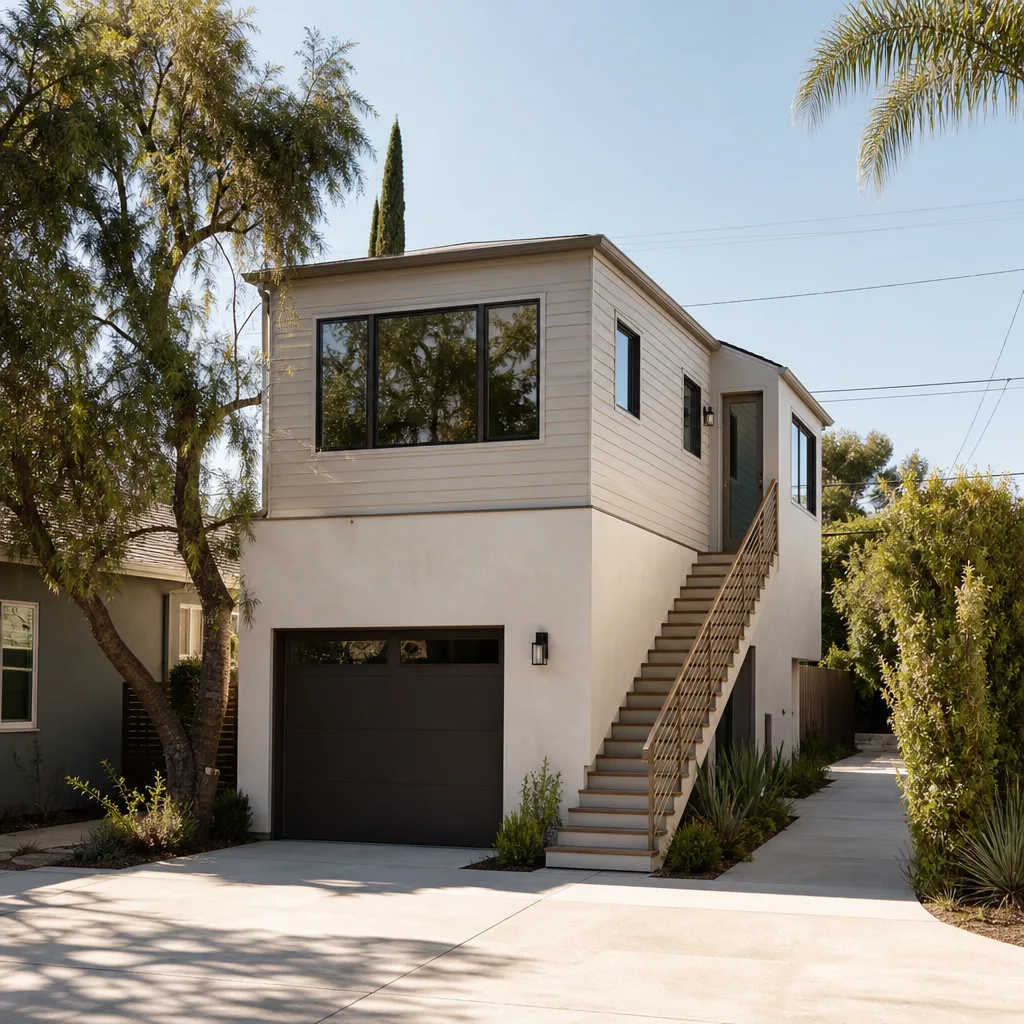
A well-run accessory dwelling unit in Nevada takes 4 to 9 months from signed contract to certificate of occupancy. Homeowners who budget 3 months are disappointed. Those who plan for 12 are pleasantly surprised. The difference lives almost entirely in the permit queue, not the job site. We’ve watched a Mesquite garage conversion sit in plan review for 11 weeks while the framing crew was booked and waiting. That’s the part nobody quotes you. This guide breaks the full calendar into five phases with realistic week ranges, explains how your own decision speed moves the finish date, and shows what a real schedule document looks like before you sign anything.
Quick Answer
Most ADUs in Nevada take 4 to 9 months start to finish, and only about 3 to 5 of those months are actual construction. The rest is design, plan review, and permit approval, which is where schedules usually slip. A garage conversion in Mesquite can move faster (closer to 4 months total) because it reuses an existing foundation and envelope, while a detached backyard unit with a new slab and utility trench often lands at 8 to 9 months.
Table of Contents
- The Five Phases of an ADU Timeline
- How Long Does Design and Drawing Take?
- Permit Submittal and Review: The Real Variable
- Construction: What Moves the Finish Date
- How Your Own Decisions Add or Remove Weeks
- What a Legitimate Project Schedule Looks Like
- Substantial Completion vs. Certificate of Occupancy
- Common Mistakes to Avoid
The Five Phases of an ADU Timeline
Every ADU project runs through the same five phases. Each one has a realistic week range, and each one has an owner. When a contractor quotes you “12 weeks,” they’re usually quoting only phases four and five. Here’s the whole calendar.
- Pre-design decisions (1 to 3 weeks). You settle on build type (detached, attached, garage conversion), budget ceiling, and the lot position. This is where you decide whether you’re converting the two-car garage or buying a Boxabl Casita and setting it on a new slab.
- Architectural drawings (3 to 8 weeks). A draftsman or architect produces site plan, floor plan, elevations, and structural details needed for submittal. Detached units with new utilities take longer than interior remodels.
- Permit submittal and review (4 to 16 weeks). This is the phase that eats schedules. More on this below.
- Construction (10 to 20 weeks). A garage conversion typically runs 10 to 14 weeks. A detached stick-built unit ranges 16 to 20 weeks, depending on weather and inspection scheduling.
- Final inspection and CO (1 to 3 weeks). The building department signs off, and you receive the certificate of occupancy. No tenant moves in before this document is in hand.
Add them up: a fast garage conversion lands around 19 weeks (roughly 4.5 months). A detached backyard unit with a slow review push lands near 38 weeks (about 9 months). If you want the full breakdown of what each build type involves, our ADU Builders in Mesquite page walks through the options in detail.
How Long Does Design and Drawing Take?
Architectural drawings for an ADU take 3 to 8 weeks depending on complexity and how fast you approve revisions. We’ve seen a simple garage conversion drawing set approved in 11 days. We’ve also seen a detached unit with a sloped lot sit in revision for six weeks because the homeowner couldn’t decide between a shed roof and a gable.
Here’s what actually happens during this phase:
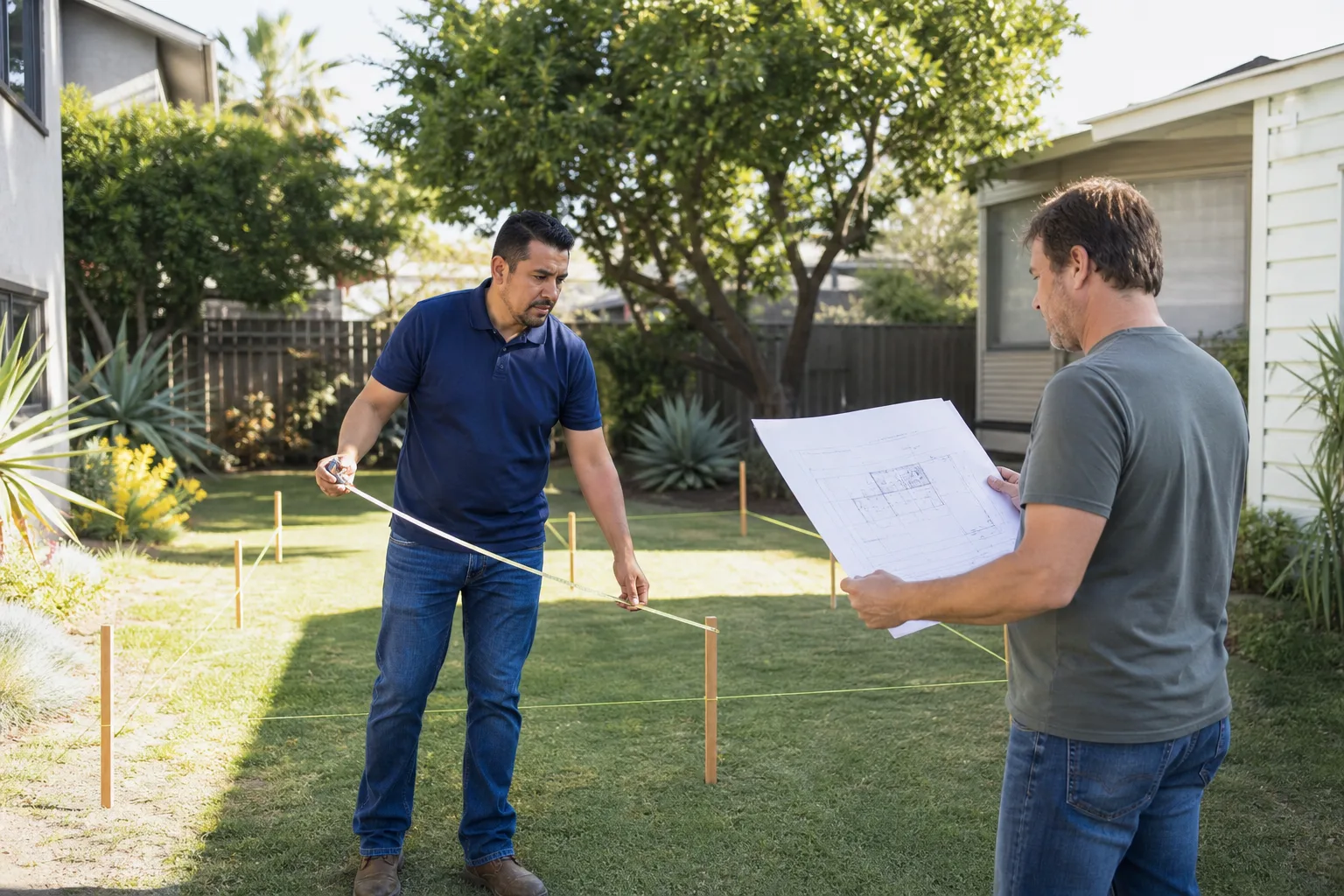
- Site survey and existing conditions (days 1 to 7). Someone measures the existing structure and checks setbacks. In Mesquite’s older neighborhoods, lot lines and recorded easements sometimes don’t match what’s on the ground. That discovery happens here, not after you’ve poured concrete.
- Schematic design (weeks 1 to 3). Floor plan, elevations, and a rough materials list. If you’re using a prefab platform like Plant Prefab or a panelized system, the manufacturer’s spec sheet feeds directly into this step.
- Construction drawings (weeks 3 to 6). Structural, electrical, plumbing, and mechanical. This is where a Boxabl-style unit differs from a stick build: the factory provides its own stamped drawings, which can shorten this phase significantly.
- Your review and approval (1 to 10 days). You sign off on the drawings before they go to the city. Delay here delays everything downstream.
The biggest schedule lever in this phase is you. Contractors who can’t get a homeowner to respond to drawing revisions add two to four weeks to the calendar without lifting a hammer. Our Garage Conversion Contractor in Mesquite page notes that garage conversions often skip some design steps entirely since the envelope already exists.
Permit Submittal and Review: The Real Variable
Permit review is where the calendar actually slips, and it’s why two identical ADUs on the same street can finish months apart. A submitted-permit set that comes back clean moves through in 4 to 8 weeks. One that draws a comment letter adds another 2 to 4 weeks per review cycle.
Washington County’s plan review queue has grown in recent years, and review times climb as more homeowners pursue ADU permits at once. In Mesquite specifically, the building department handles both city and county jurisdiction questions, which means knowing which one takes your application matters. A contractor who files under the wrong jurisdiction loses weeks before the review even starts.
Here’s what shortens the review:
- A complete submittal the first time. Missing site plan, expired engineer stamps, or unclear setback dimensions all trigger comment letters.
- A pre-submittal meeting with the plan reviewer. A short conversation before you file can surface department preferences that aren’t written in the code.
- A setback variance when needed. If your lot is too narrow or the ADU would sit too close to the property line, you need a setback variance (the city’s written permission to build closer to the line than the standard rule allows). That process can add 4 to 8 weeks. Better to know on day one.
- A designated point of contact for the city. When a comment letter arrives, someone needs to respond within 48 hours, not two weeks later.
Contractors who know the department anticipate comment letters rather than react to them. That’s a schedule difference you can’t fake.
Construction: What Moves the Finish Date
Actual construction on a garage conversion in Mesquite runs 10 to 14 weeks. A detached backyard unit runs 16 to 20 weeks. Whether you land at the low end or high end depends on a few things you can partly control.
What moves the date:
- Weather. Mesquite’s summers push afternoon concrete work to early morning, which is fine, but monsoon season (roughly July through September) can add rain days to framing and roof dry-in. Planning a fall foundation pour often shaves two to three weeks off a summer start.
- Inspection scheduling. Each inspection (foundation, framing, rough-in, insulation, final) needs to be booked and passed. A failed framing inspection adds three to seven days while you correct and rebook.
- Material lead times. A James Hardie siding order often ships faster than a custom window package. Prefab platforms eliminate most on-site framing delay because the factory builds the structure, but utility connections still happen on your lot.
- Crew availability. A crew that’s booked through the month adds weeks. Contractors who schedule back-to-back trades tightly finish faster.
What doesn’t move the date as much as people expect: cosmetic finishes. Cabinets and counters can happen near the end without holding up the inspection sequence, as long as you choose them before the trim stage.
How Your Own Decisions Add or Remove Weeks
We’ve seen two ADUs on the same block finish six weeks apart because one homeowner answered emails within a day and the other took a week each time. Your decision speed is the single largest schedule lever you control.
Decisions that add weeks when delayed:
- Approving the drawings. Every revision cycle adds 3 to 10 days.
- Choosing finishes. Siding material, roofing, flooring, and fixtures all need to be selected before the trades hit those stages. Delaying a flooring decision doesn’t hold up the framing, but wait too long and the finish crew sits idle.
- Responding to RFIs. When the city or the crew asks a question, a fast answer keeps the permit or the job moving. A delayed answer stops it.
- Signing change orders promptly. A change order caught early and signed the same week costs less time than one that sits on your kitchen counter for a month.
Homeowners who plan to spend 40 minutes a week on their project finish closer to the low end of every range. That sounds trivial. It isn’t. In our experience, the fastest projects have a homeowner who treats the build like a part-time job for five months.
What a Legitimate Project Schedule Looks Like
A real ADU schedule is a written document with milestone dates, an owner listed for each milestone, and defined triggers that allow the schedule to move. If a contractor hands you a verbal “about eight weeks” and nothing else, that’s not a schedule. That’s a guess.
Here’s what to look for on paper:
- Milestone dates. Specific dates for design kickoff, drawing completion, permit submittal, permit issuance, construction start, framing, rough-in, drywall, final inspection, and CO. Not just start and end.
- Owner of each milestone. Every milestone has a name attached: homeowner, architect, city reviewer, contractor, sub. When a milestone slips, the schedule shows who owned it and why it moved.
- Defined triggers for schedule adjustment. A schedule should say what happens if the city takes 11 weeks instead of 6, or if the homeowner changes the layout mid-drawing. “If drawing approval slips more than five business days, construction start shifts by the same interval” is the kind of clause you want to see.
- Long-lead items flagged. Windows, custom doors, and prefab delivery lead times listed with order-by dates.
The Garrison Standard follows the same discipline. Our written price goes in writing before any work starts, and the schedule lives alongside it. That’s the difference between a contractor who promises a date and one who plans to hit it.
Substantial Completion vs. Certificate of Occupancy
Substantial completion and certificate of occupancy are two different milestones, and confusing them can keep a tenant out of a finished unit for weeks.
Substantial completion means the work is complete enough for the intended use. The building department hasn’t signed off yet, but the structure, utilities, and finishes are done. Contractors often mark this milestone and organize final cleanup and punch list around it.
The certificate of occupancy (CO) is the building department’s written statement that the unit is safe and code-compliant to occupy. It comes after final inspection of framing, electrical, plumbing, mechanical, and life-safety items. The city issues it, not the contractor.
Why this matters: some homeowners move a tenant in when the ADU “looks done.” That’s a mistake. Without the CO, a rental is not legally occupiable, your insurance may not cover a tenant injury, and a subsequent inspection that flags an issue forces the tenant out while it’s corrected. Wait for the CO. Budget 1 to 3 weeks between substantial completion and the CO in Mesquite, depending on final inspection scheduling.
Common Mistakes to Avoid
- Planning for the build only. Homeowners hear “12 weeks to build” and assume the ADU is done in 12 weeks. That’s two-thirds of the story. Add the design and permit phases, and you’re looking at 4 to 9 months total.
- Waiting to start design until spring. Spring and summer backlog in the permit queue is a real thing. Starting design in fall and submitting in winter often gets you through review faster.
- Skipping the pre-submittal meeting. Fifteen minutes with a plan reviewer can save a comment letter cycle. We’ve seen it remove three weeks from a Mesquite detached-unit schedule.
- Choosing a builder before checking the schedule document. A builder who can’t show you a milestone schedule before you sign is telling you how the project will go.
- Underestimating your own decision role. Delayed finish selections cost weeks. Make the choices on schedule even if the decisions feel low-stakes.
- Moving a tenant in before the CO. It’s not just a compliance issue. It’s a liability and insurance problem if something goes wrong in an unpermitted unit.
- Skipping the setback variance check. If your lot is tight, discover the variance requirement during pre-design, not during plan review. Our Room Addition Contractor in Mesquite page covers setback rules in more detail.
When to Call a Professional
Call a professional ADU builder when you’ve decided you want an ADU but haven’t yet confirmed what your lot legally allows, when you’ve received a permit comment letter and aren’t sure how to respond, when a contractor is quoting you a build-only timeline and no full calendar, or when a previous contractor left the permit board blank. Fielding ADU Builders Mesquite offers free estimates in Mesquite. Call (833) 717-0766 to schedule one. Every project we take on gets a written price before any work starts, a written one-year guarantee against workmanship defects, and a schedule document with milestone dates and owners. Our crews are background-checked and uniformed, and a live person answers the phone at any hour.
Frequently Asked Questions
Most ADUs in Nevada take 4 to 9 months from signed contract to certificate of occupancy. Construction alone runs 10 to 20 weeks; design and permit review accounts for the other 2 to 5 months. Garage conversions land near 4 to 5 months total; detached units land closer to 8 to 9 months. Call (833) 717-0766 for a project-specific estimate.
A garage conversion in Mesquite typically runs 3.5 to 5 months total, faster than a detached build because the foundation, walls, and roof already exist. Permit review is often shorter for conversions too, since no new lot coverage is added. Call (833) 717-0766 for a written schedule on your specific garage.
No. Starting construction before permit approval is illegal in Nevada, and it triggers stop-work orders that push the schedule back further than the review would have. Only work exempted by the building department may proceed early. Call (833) 717-0766 and we’ll walk through what’s permitted.
Substantial completion means the work is done and usable; the CO is the building department’s written authorization to occupy. The gap is usually 1 to 3 weeks of final inspection scheduling. Don’t move a tenant in before the CO is in hand. Call (833) 717-0766 for the inspection sequence on our projects.
Review times vary by jurisdiction and current backlog. Mesquite’s building department handles both city and county applications, and knowing which to file under matters. A complete submittal with no missing pieces clears faster than a partial one. Call (833) 717-0766 to talk through your specific parcel.
No. Our written price is handed to you before any work starts, and the number you approve on day one is the number on the final invoice. Change orders only happen when you request a scope change. The Garrison Standard guarantee covers workmanship defects for 365 days. Call (833) 717-0766 for a written estimate.
The Bottom Line
If you’re planning an ADU in Mesquite, plan for the full calendar, not the construction phase. Budget 4 to 9 months from signed contract to certificate of occupancy. Expect design at 1 to 8 weeks, permit review at 4 to 16 weeks, construction at 10 to 20 weeks, and CO at 1 to 3 weeks. Know that your own decision speed is the largest lever you control. Demand a written schedule before you sign, expect the certificate of occupancy before you move anyone in, and verify the written price and written guarantee before work starts. That’s how a build goes fast and clean.
Fielding ADU Builders is an independently owned and operated member of the Garrison Partners family, building to The Garrison Standard since 2006. We work with prefab and modular platforms including Boxabl and Plant Prefab, as well as conventional construction using materials like James Hardie siding. Visit our Fielding ADU Builders Mesquite home to start, or call (833) 717-0766 for a free estimate. A live person answers every call, day or night.
Written by the team at Fielding ADU Builders Mesquite.